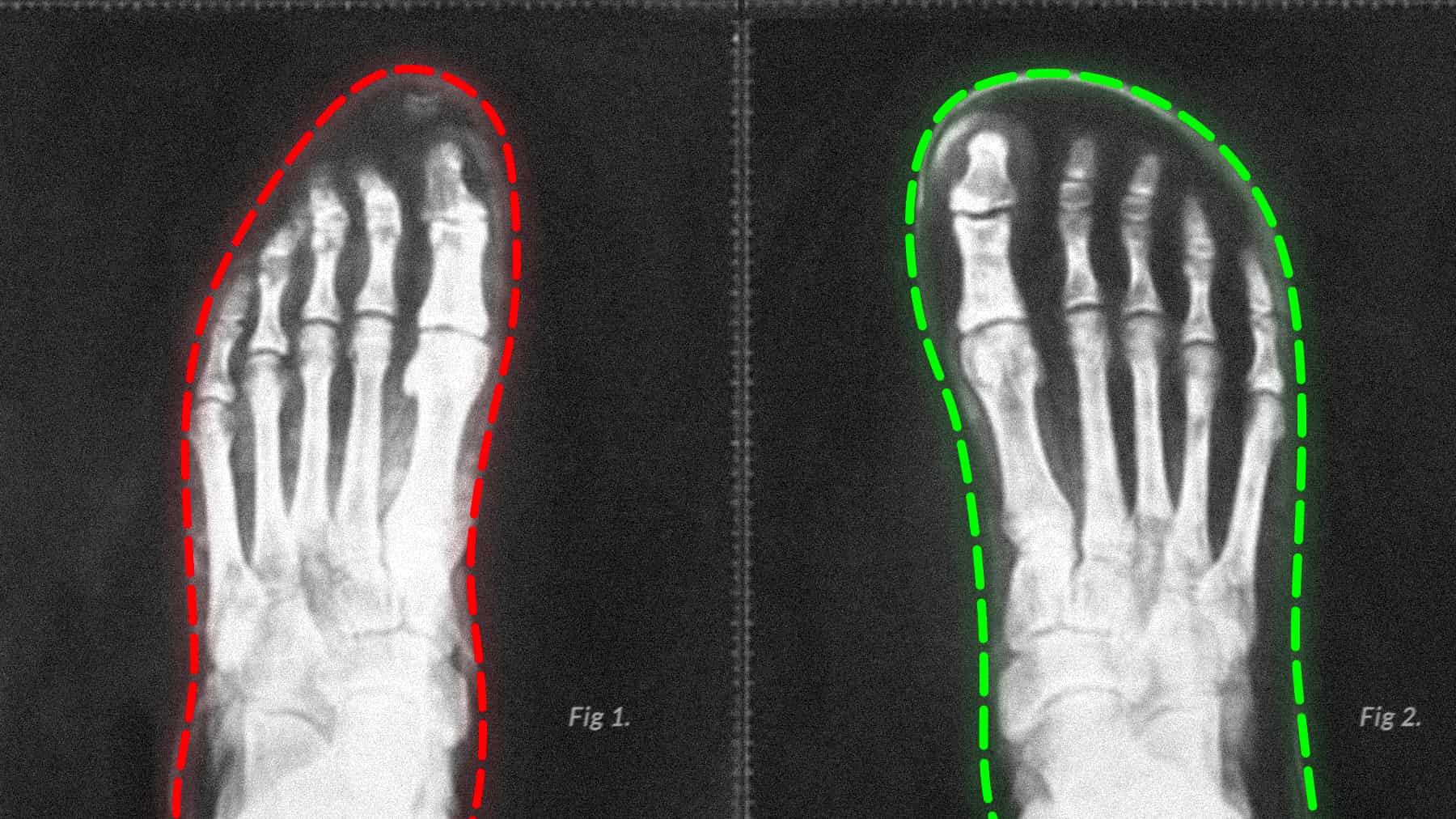
When choosing children's sneakers, parents often decide between classic sports models and barefoot shoes. At first glance, they may look similar, but their construction and the way they affect a child's gait are very different.
Let’s take a closer look at the main differences between classic sports sneakers (for example, models by Adidas) and barefoot sneakers like Baby Bare Urban.
1. Toe box shape
One of the biggest differences is the space for the toes.
Classic sports sneakers often have a narrower toe box that follows the design of performance or aesthetic athletic footwear. During everyday wear, this can mean less room for the toes to splay naturally.
Barefoot shoes, such as Baby Bare Urban, feature an anatomically shaped toe box that follows the natural shape of the foot. The toes have more room to move, which supports stability and natural walking.
2. Sole thickness and flexibility
Classic sports sneakers are often designed with a thicker sole and cushioning, which is particularly suitable for sports activities.
Barefoot shoes operate on a different principle. The sole is thin and highly flexible, allowing the child to better feel the surface beneath their feet. This ground contact helps to naturally engage the foot muscles.
3. Drop (heel-to-toe differential)
In many classic sneakers, the heel is slightly elevated.
Barefoot footwear has a zero drop, meaning the heel and the toe are at the same height. This principle aims to mimic the natural experience of walking barefoot.
4. Shoe flexibility
Classic sports models tend to be firmer to provide stability during sports.
Barefoot shoes are soft and flexible in all directions, allowing the foot to work naturally.
5. Best use for each shoe type
• sports activities
• dynamic movements
• training
Barefoot sneakers
• everyday wear
• walks
• preschool or school
• walks
• preschool or school
The Baby Bare Urban model is designed specifically as an urban barefoot sneaker – lightweight, flexible, and perfect for children's everyday adventures.
How to choose correctly?
When choosing shoes, it is good to consider:
• the shape of the child's foot
• space for the toes
• sole flexibility
• intended use
• the shape of the child's foot
• space for the toes
• sole flexibility
• intended use
Many parents today choose barefoot shoes for everyday wear during the day and sports sneakers for specific athletic activities.
Each type of footwear has its place. Classic sports sneakers are designed for performance and sports, while barefoot shoes aim to come as close as possible to the natural experience of walking barefoot.
If you are looking for lightweight urban sneakers with an anatomical shape and a flexible sole, Baby Bare Urban is one of the options worth considering.
| Feature | Classic Sports Sneakers | Barefoot Sneakers |
|---|---|---|
| Sole | Thicker with more cushioning. | Thin and very flexible. |
| Drop (heel-to-toe) | Often a slightly raised heel. | Zero drop (heel and toe at the same height). |
| Toe Box Width | Narrower and more tapered. | Anatomical shape with more room for toes. |
| Flexibility | Stiffer construction. | Bends in all directions. |
| Ground Feel | Shock-absorbing; isolates foot from ground. | More natural contact with the ground. |
| Weight | Usually heavier. | Generally very lightweight. |
| Purpose | Sports and impact absorption. | Supporting natural foot movement |