
How Barefoot Children's Shoes Are Made in Europe
(And why it’s not a romantic story)
When I started looking into manufacturing the first barefoot shoes for children years ago, I had a naive idea: if something makes sense anatomically and for healthy development, manufacturers would simply adapt. It didn't happen. At least not back then. However, through gradual steps and technological progress, we’ve been moving in that direction over the last few years.
European manufacturing has great marketing today. It’s associated with quality, craftsmanship, and an honest approach. But the truth is, making children’s footwear in Europe is mainly about technical compromises, high costs, and decisions that cannot be undone.
When I started producing in a small Slovak workshop 10 years ago, I quickly realized that barefoot footwear isn't "just a different shoe design." It’s a completely different way of thinking—about the foot, about movement, and most importantly, about production. And that’s where the reality started, and it isn't romantic at all.
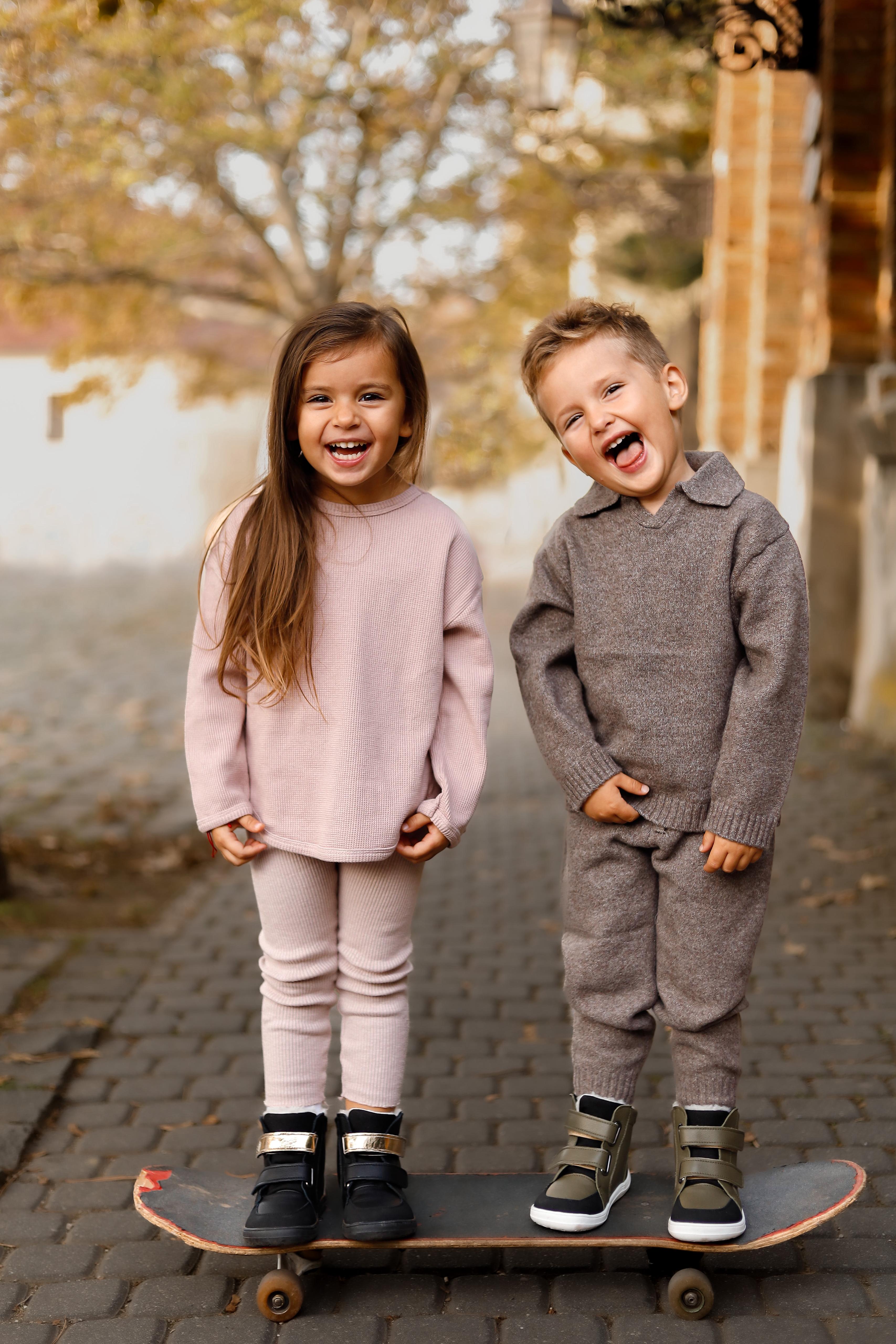
(Photo: Children's feet in the Febo Sneakers model)
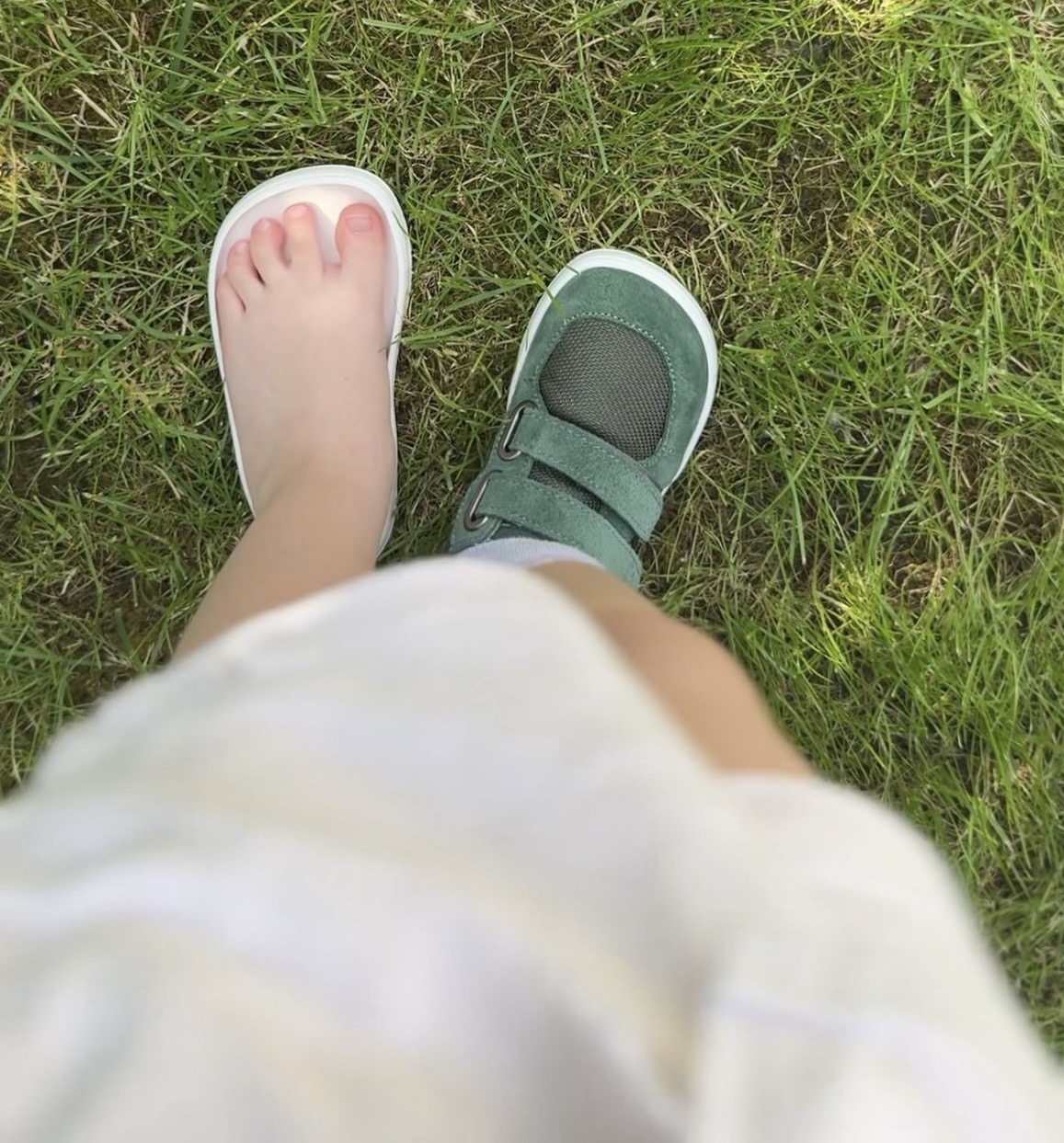
Barefoot doesn't start with design. You can’t just say: "This is how it’s always been done, we’ll just change the look."
Barefoot means:
-
Respecting the width of a child's foot.
-
Letting the toes do their work.
-
Not interfering with natural movement.
-
Ditching heels and traditional stiff counters (heel supports), which are considered standard—even desirable—for a child's foot development.
When we started, we had to change our entire manufacturing mindset to get the desired result. This immediately clashed with the reality of existing lasts, molds, and production processes designed for conventional footwear, not for children's feet.
The first questions I asked myself were: "Will it look good?" "Are we making something that will harm children over time?"
The answers didn't come immediately, but gradually. Year after year, I find that barefoot shoes can be both stylish and, in many cases, helpful with health issues. But more on those benefits later…
1. The Last: Where Barefoot Either Succeeds or Fails
If there’s one key element in barefoot footwear, it’s the last. Not the marketing. Not the name. Not the color.
(Photo: The process of adjusting a shoe last)
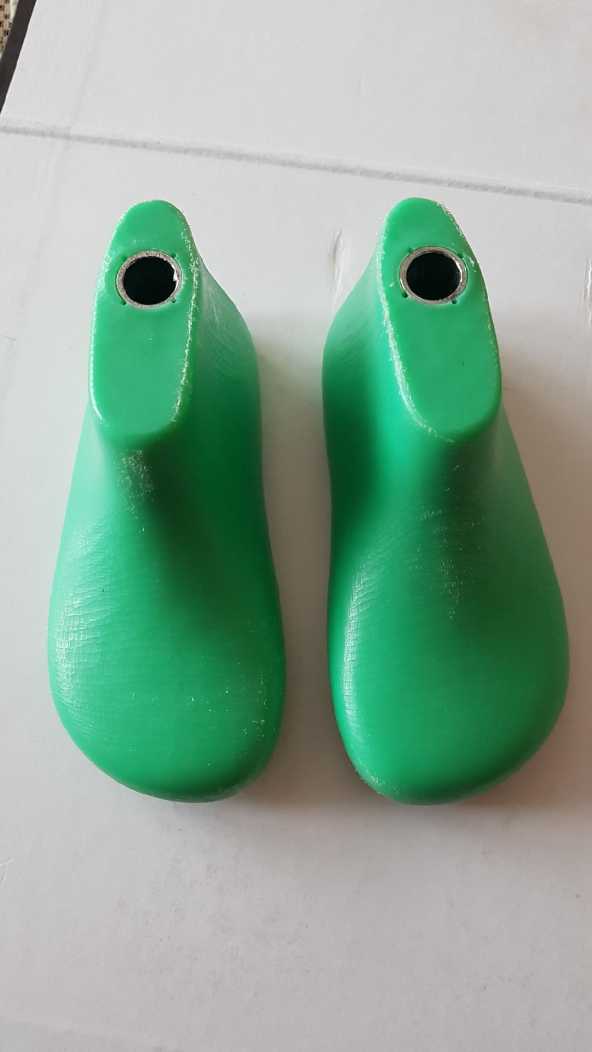
Every children's shoe starts with a last. This is where the real work happens. A last isn't just a "shoe shape." It is the fundamental technical element that determines whether a shoe:
-
Respects the anatomy of a child’s foot, allowing toes to work, or begins to gradually deform them.
-
Provides enough space for toes and lets the foot function naturally, or just "looks barefoot."
There is no "one size fits all" solution for children's shoes. A child's foot evolves, changing in shape, width, and proportions. Adjusting a last means testing, making millimeter-sized tweaks, and creating new prototypes. Every change costs time and money. Last adjustments are slow and expensive.
Often, it’s about millimeters that make a massive difference in practice—especially in the toe box, to ensure there isn't too much rounding near the big toe. Simultaneously, the heel area is crucial; even a few extra millimeters can mean the shoe won't fit around the ankle. A barefoot shoe must wrap beautifully around the ankle so it doesn't strain the child's foot while walking. What is commonly overlooked in traditional footwear becomes unforgivable in barefoot shoes.
I remember moments when a last looked "almost good"—and that was exactly when we knew we couldn't let it go into production. Because for children, "almost" isn't enough.
2. Prototypes You Will Never See for Sale
Every barefoot model goes through several prototypes that are never sold. A prototype is not a product. From the outside, it looks like a finished shoe, but in reality, it’s just a test.
We test:
-
Sole flexibility.
-
Material behavior during walking and running.
-
Stitching stability and comfort during movement.
-
Pressure points.
-
Real-world wear by children.
-
Maintenance and cleaning.
Very often, a prototype looks great but fails during real wear. When that happens, we take a step back. And no, it’s not a failure. It’s part of a process that cannot be skipped if the shoe is to be functional. Many times, a shoe is beautiful but doesn't function the way a barefoot shoe should.
In those cases, it gets sidelined. It’s frustrating, expensive, and time-consuming. But that is exactly what sets genuine barefoot footwear apart from "compromise" shoes.
(Photo: Our very first prototype of the current Febo Winter model)
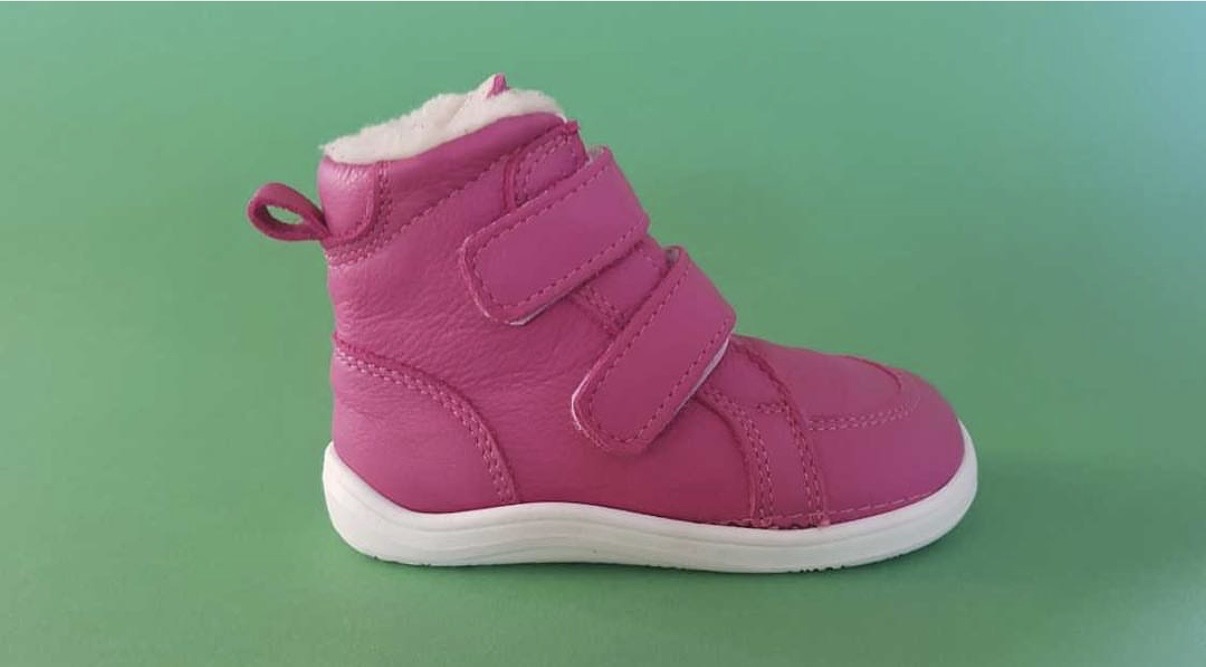
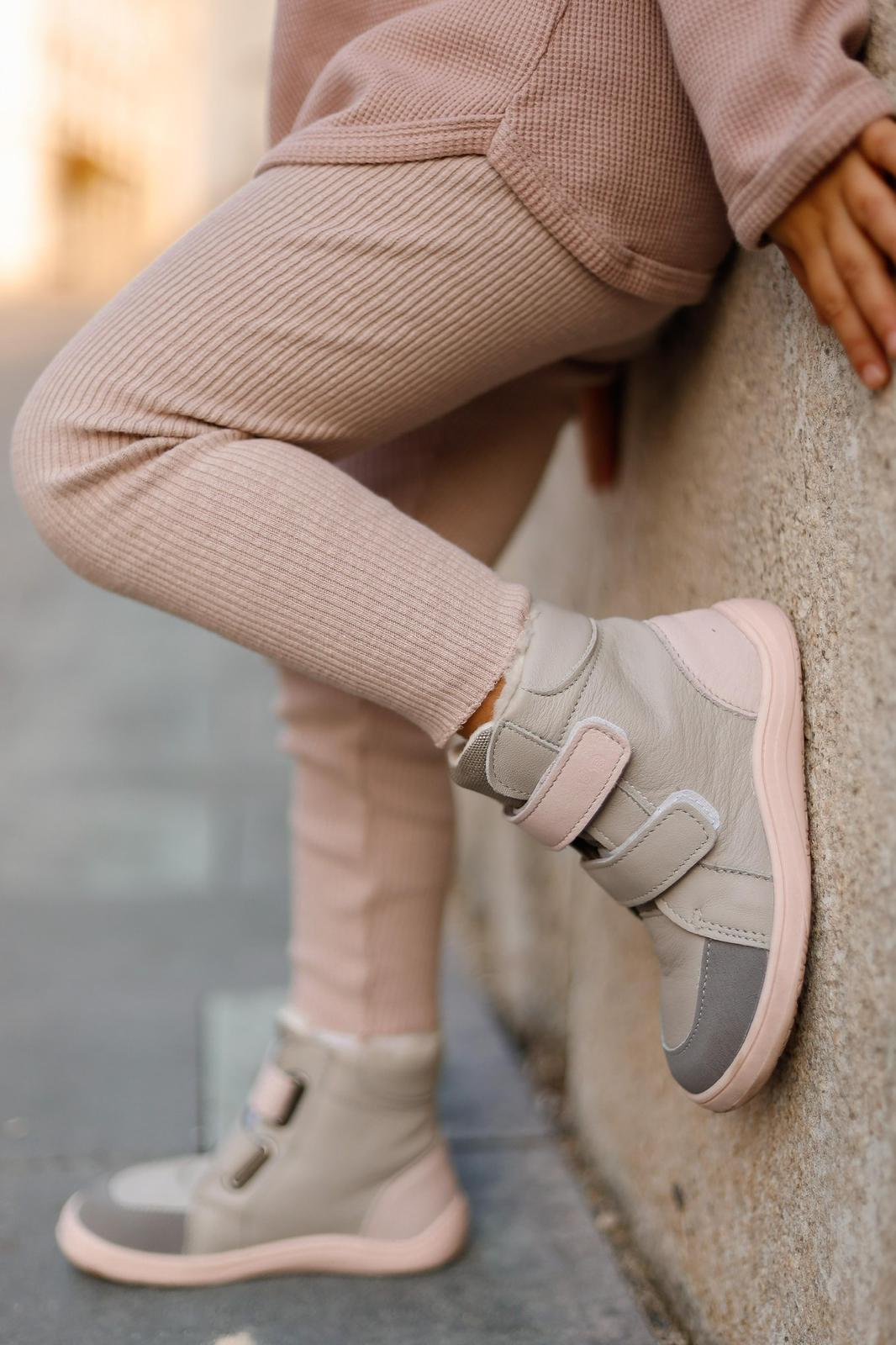
(Photo: The final Febo Winter model)
3. European Production and Barefoot: A Combination for the Resilient
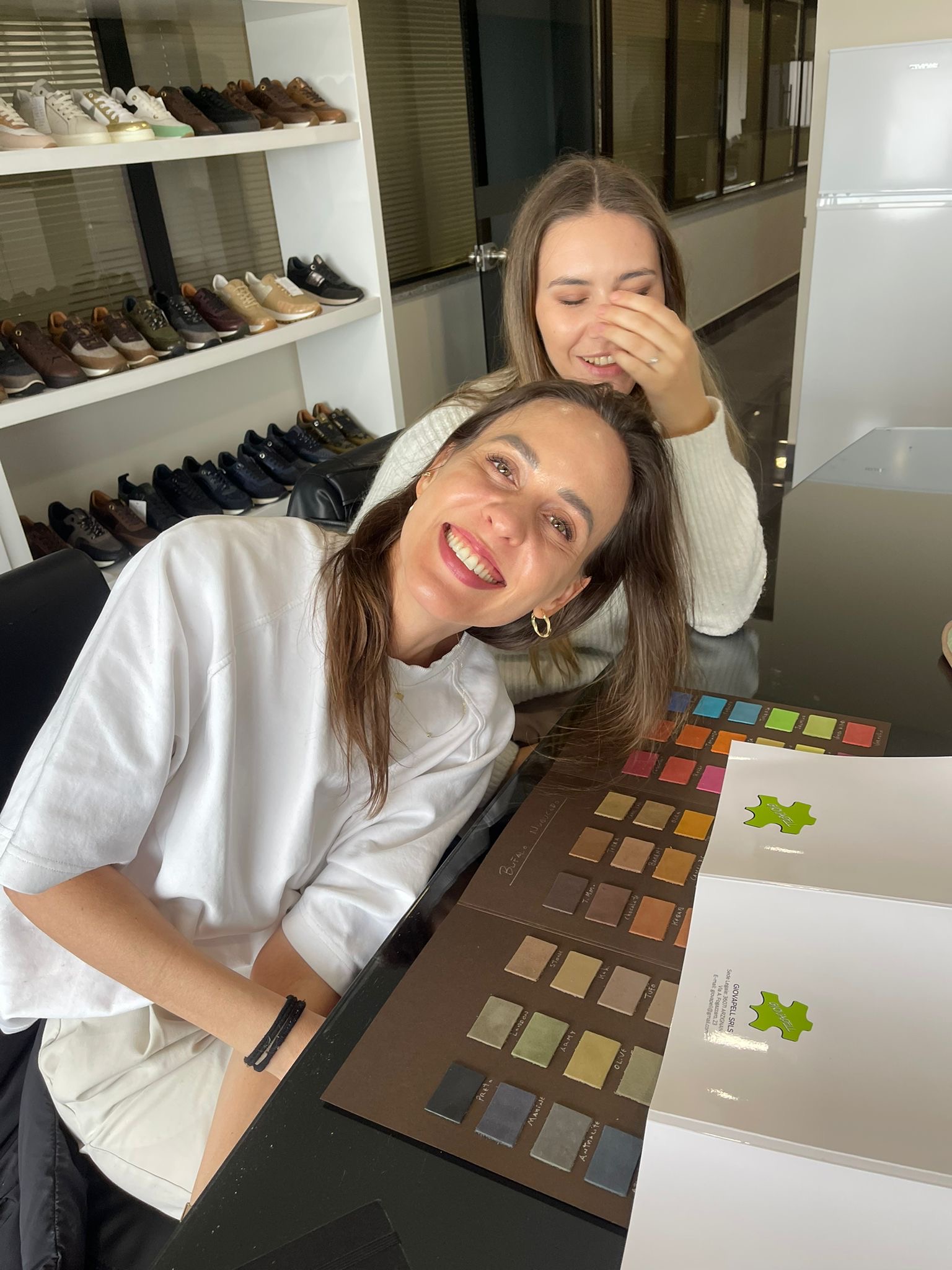
Manufacturing barefoot shoes in Europe is a demanding combination. We moved our production from Slovakia to Portugal. We were excited about the progress—expecting faster processes and more realistic prices. And then, boom—reality brought us back to our knees.
Why?
-
Molds for flexible soles are expensive, costing tens of thousands of Euros.
-
Minimum order quantities (MOQs) are high; small batches are unattractive to manufacturers.
-
We have limited options and colors due to these high MOQs.
-
They require upfront payments.
-
"Every extra seam costs money."
-
Planning happens months in advance.
As a small brand, you make decisions that mean: tying up money months in advance, trusting your own data and intuition, and bearing full responsibility for mistakes. This is why many barefoot brands fail, compromise on their principles, or never even start production.
4. Molds and Technical Complexity: The Hardest Reality for a Small Brand
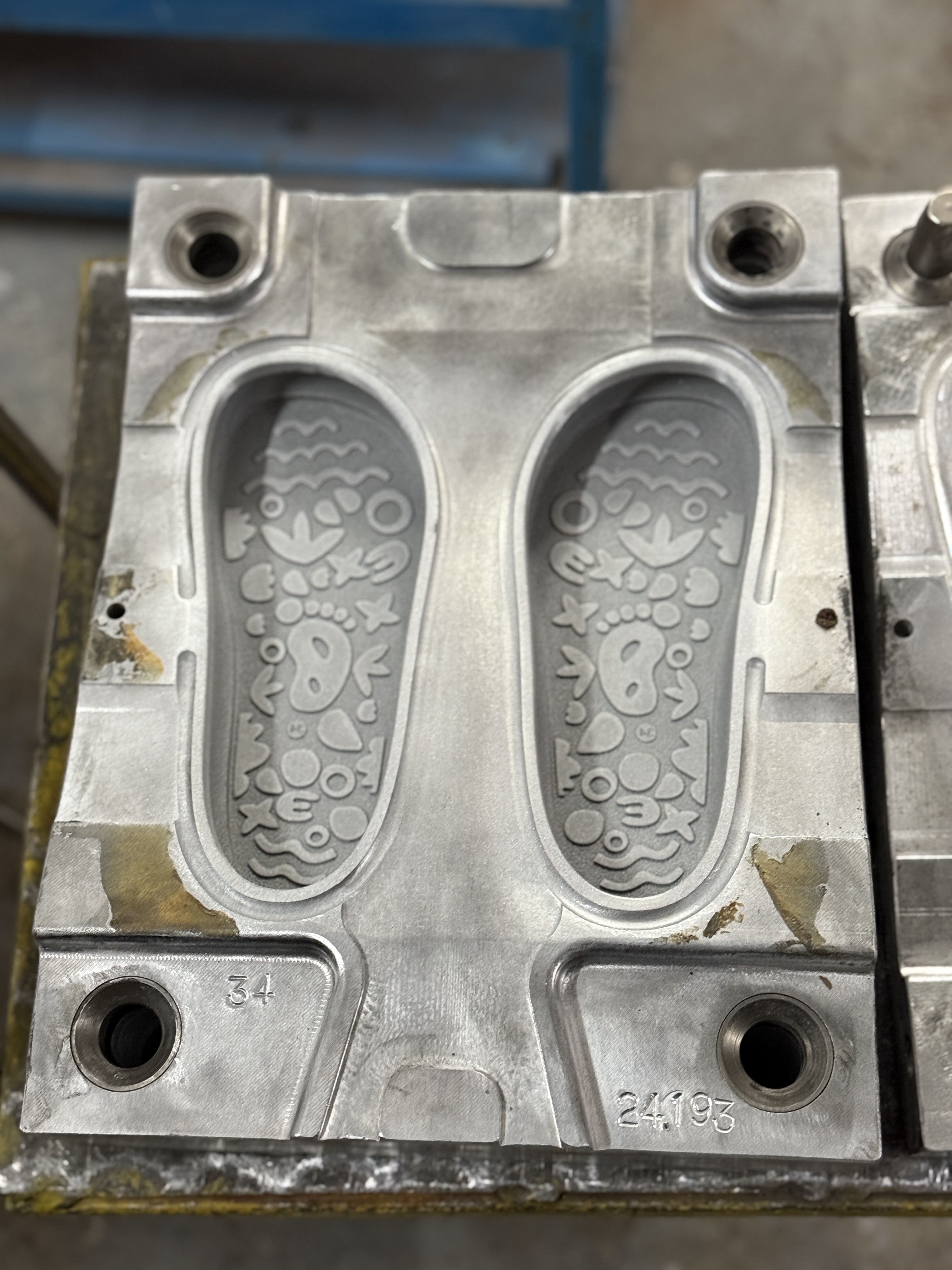
As I mentioned, outsole molds cost thousands of Euros. Manufacturers don't make them for just a few dozen pairs. That is, if you want your own patented outsole with a unique shape, rather than using "free molds"—which would result in your shoes having the same shape as dozens of other manufacturers.
(Photo: Our BBS molds – molds for LINE outsoles)
Technical Complexity: A children's shoe must handle contradictory requirements:
-
Be soft yet durable.
-
Be flexible yet safe.
-
Be lightweight yet stable.
At the same time:
-
It must not force the foot into an unnatural position.
-
It must not hinder toe movement.
-
It must not create pressure points.
Every technical detail has a consequence. Cheap solutions show up quickly—often at the expense of healthy foot development.
5. Materials: A Compromise Between Function, Price, and Availability
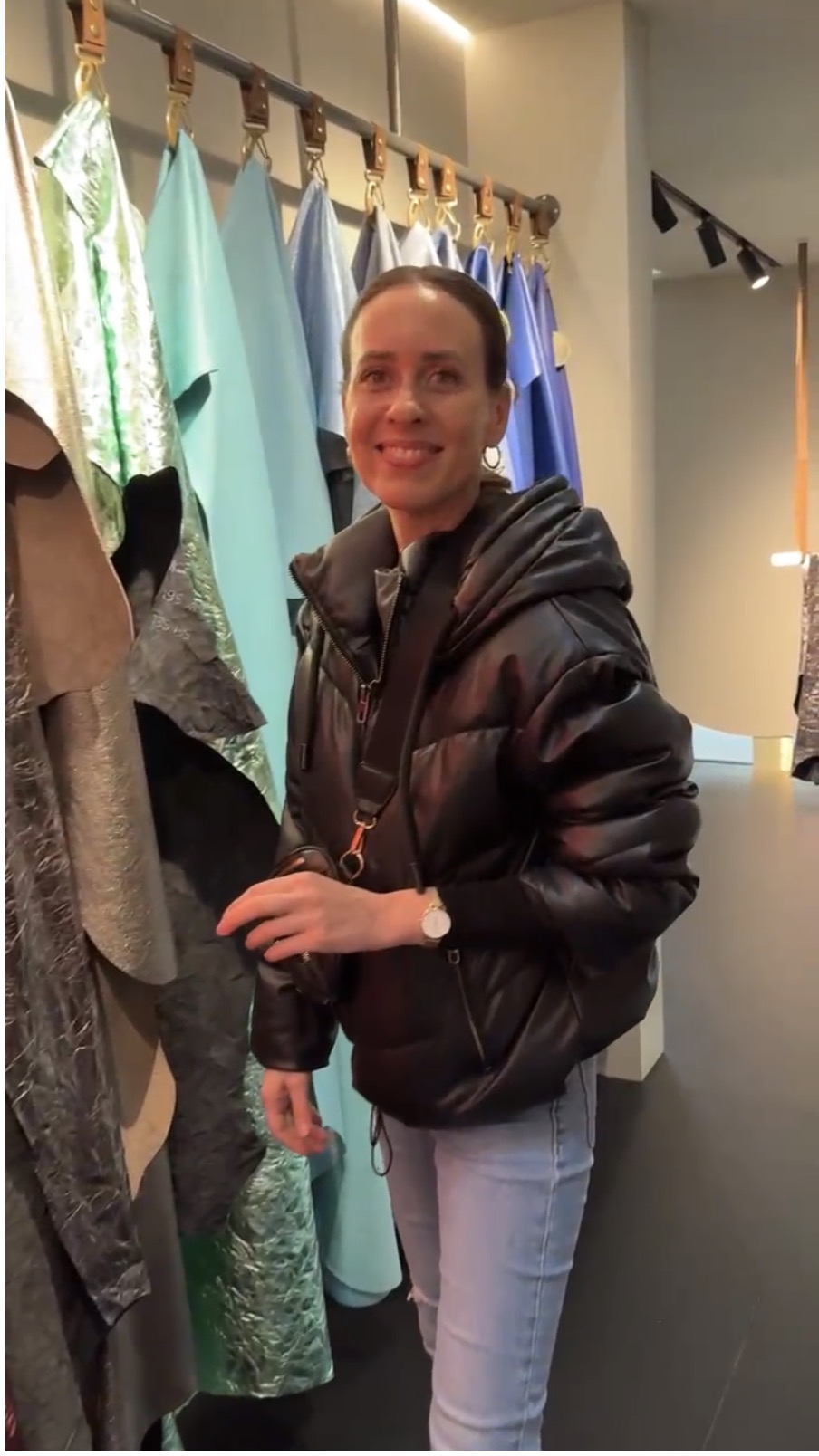
A material that works on paper might not work in reality. For children's shoes, we look for softness, breathability, abrasion resistance, and safety for children's skin.
Not every material that looks good passes long-term testing. And not every available material meets our technical and ethical criteria. Here, too, the easier and cheaper solution always comes with a hidden cost.
6. Cash Flow is Often Harder Than the Production Itself
You pay for production:
-
Before the shoes arrive.
-
Before you start selling.
-
Before you know how the market will react.
This is why many brands with a good product fail. It’s not because of bad design, but because of financial pressure. European manufacturing requires discipline, long-term planning, and a willingness to take risks.
Make no mistake. In our business, every bad decision means tied-up capital, the risk of unsold inventory, and the need to make precise decisions without guaranteed results. This is often where it's decided who survives in the market and who doesn't.
Why We Insist on Barefoot Principles and European Manufacturing
For us, barefoot is not a trend or a marketing label. It is a commitment:
-
Not to narrow the toe box because "it sells better."
-
Not to stiffen the sole because "it lasts longer."
-
Not to add supports that a child's body doesn't need.
It’s easier to make compromises. But when it comes to children’s feet, we decided we wouldn't make them.
It’s not perfect. But it is intentional. Making barefoot shoes in Europe is slow, expensive, and full of doubts. And yes—sometimes we ask ourselves if it wouldn't be easier to take a different path. But we always come back to the same thing:
Children don't need "better shoes." They need shoes that won't get in the way of their healthy development.
Why do we choose to manufacture in Europe anyway? Not because it’s easier. Nor cheaper. Nor faster. At Baby Bare Shoes, we manufacture in Europe precisely because it allows us to think about, question, and improve every single detail.
-
We have control over the process.
-
We know exactly what we are putting on children's feet.
-
We can react to mistakes and improve.
At Baby Bare Shoes, we manufacture exclusively in Europe, and every model goes through this entire process—from the design of the last to the final quality control.
If you’re interested in the result of this journey, you can find it here: 👉 www.babybareshoes.sk